
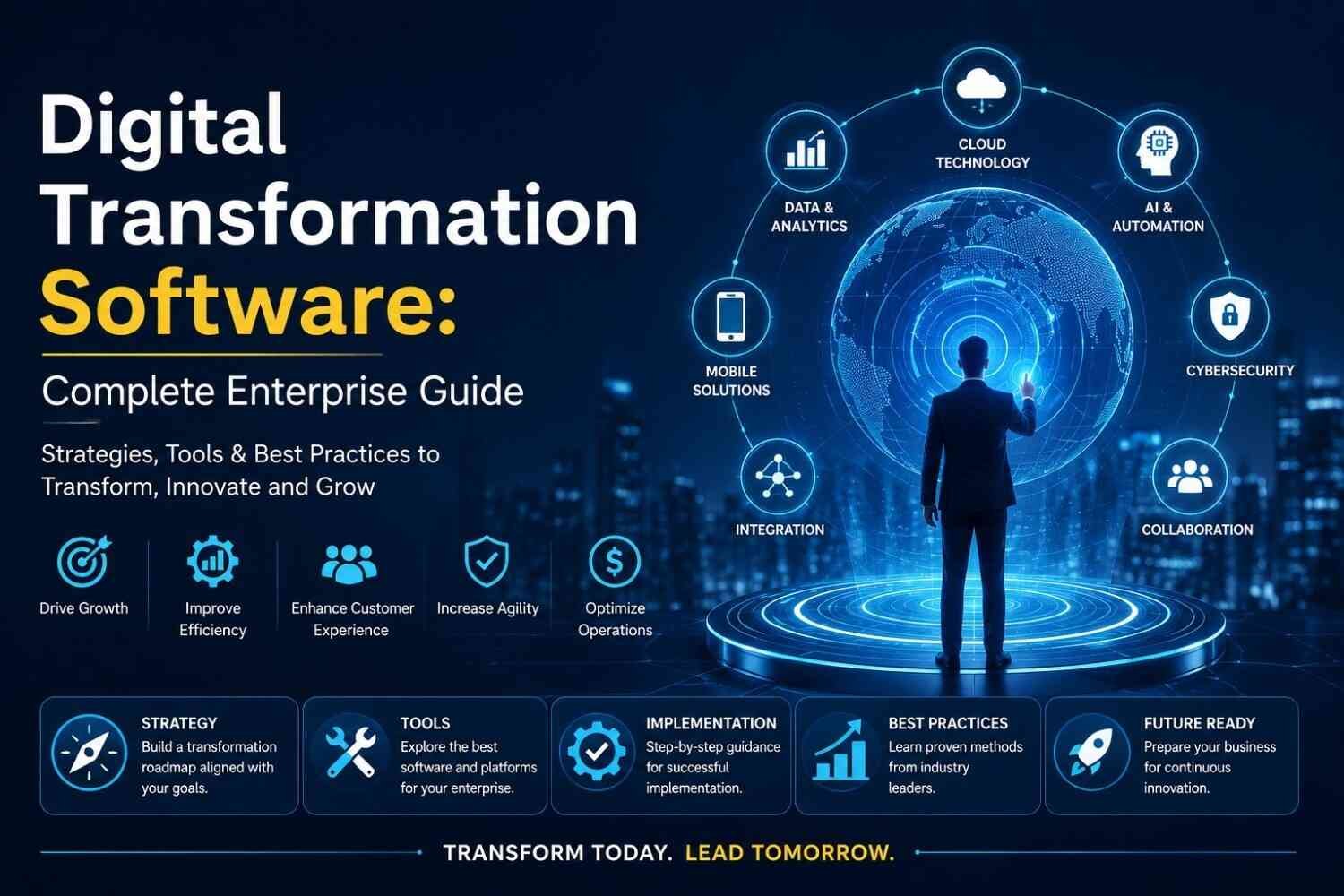
In today's competitive business landscape, Digital Transformation Software has become one of the most valuable investments for organizations worldwide. Companies are rapidly adopting Artificial Intelligence (AI), Cloud ERP, CRM Software, Business Intelligence (BI), Workflow Automation, and Enterprise SaaS platforms to streamline operations, improve customer experiences, and maximize profitability.
Organizations that successfully embrace digital transformation often achieve increased operational efficiency, reduced business costs, better customer satisfaction, faster decision-making, improved cybersecurity, higher employee productivity, and enhanced business scalability.
Whether you're running a startup, mid-sized company, or multinational enterprise, understanding digital transformation software is essential for long-term growth.
What is Digital Transformation Software?
Digital Transformation Software refers to technologies that help organizations replace traditional manual processes with automated digital workflows.
Instead of relying on spreadsheets, paperwork, and disconnected systems, businesses use integrated software solutions to manage finance, human resources, customer relationships, supply chain, inventory, marketing, sales, analytics, cybersecurity, and collaboration.
These platforms create a connected digital ecosystem where information flows seamlessly across departments.
Why Digital Transformation Matters
Modern businesses face challenges such as increasing competition, rising operational costs, remote work requirements, customer expectations, cybersecurity threats, and data management complexity. Digital transformation software addresses these issues by automating repetitive tasks and providing real-time insights.
1. Business Process Automation
Automating repetitive tasks reduces human error while increasing productivity. Examples include invoice generation, payroll, employee onboarding, customer support, sales follow-up, and inventory updates.
2. Improved Decision Making
Business Intelligence dashboards provide executives with real-time analytics. Organizations can monitor revenue, expenses, customer behavior, sales trends, marketing ROI, and employee performance.
3. Enhanced Customer Experience
CRM software centralizes customer information, enabling businesses to personalize communication, improve response times, increase retention, and boost customer satisfaction.
4. Stronger Cybersecurity
Enterprise software includes multi-factor authentication, data encryption, identity management, backup solutions, threat detection, and compliance monitoring. This reduces security risks and protects sensitive business data.
Core Components of Digital Transformation Software
Cloud ERP
Cloud ERP integrates finance, accounting, inventory, procurement, manufacturing, and supply chain. Benefits: Real-time reporting, lower infrastructure costs, global accessibility, and easy scalability.
CRM Software
Customer Relationship Management systems help organizations manage leads, customers, sales pipelines, marketing campaigns, and customer service. Advantages include higher sales conversions, better customer retention, improved communication, and automated workflows.
Business Intelligence Software
BI platforms transform raw data into actionable insights. Features include interactive dashboards, predictive analytics, KPI tracking, financial reporting, and AI-powered forecasting.
Workflow Automation
Workflow software automates approvals, notifications, documentation, and task assignments. Popular use cases: HR, Finance, Legal, Procurement, and Customer Service.
AI-Powered Automation
Artificial Intelligence is transforming enterprise operations through intelligent chatbots, predictive maintenance, fraud detection, automated reporting, AI document processing, and machine learning analytics.
Industries Using Digital Transformation Software
Banking
Fraud detection, digital payments, loan automation, and risk management.
Healthcare
Electronic medical records, patient scheduling, telemedicine, and AI diagnostics.
Retail
Inventory automation, personalized recommendations, customer analytics, and omnichannel commerce.
Manufacturing
IoT monitoring, predictive maintenance, supply chain optimization, and robotics integration.
Education
Learning management systems, virtual classrooms, student analytics, and digital assessments.
Key Features to Look For
- Cloud-based deployment
- AI integration
- Mobile accessibility
- API connectivity
- Advanced analytics
- Workflow automation
- Cybersecurity tools
- Multi-language support
- Compliance management
- Role-based access
Benefits for Small Businesses
- Lower operational costs
- Faster business growth
- Improved customer support
- Better inventory control
- Simplified accounting
- Remote workforce management
Enterprise Benefits
- Global scalability
- Multi-location management
- Unified reporting
- Enterprise-grade security
- Compliance automation
- Advanced analytics
- AI-powered forecasting
Future Trends (2026)
- Generative AI integration
- Autonomous business operations
- Hyperautomation
- AI copilots
- Predictive analytics
- Intelligent process automation
- Low-code platforms
- Edge computing
- Digital twins
- Advanced cybersecurity automation
Frequently Asked Questions
What is digital transformation software?
It is software that modernizes business operations using cloud technology, AI, automation, analytics, and integrated enterprise applications.
Is digital transformation only for large companies?
No. Small and medium-sized businesses can also improve efficiency, reduce costs, and enhance customer service through digital transformation.
What technologies are commonly included?
Common technologies include Cloud ERP, CRM, Business Intelligence, Workflow Automation, Artificial Intelligence, Machine Learning, Robotic Process Automation (RPA), and Cybersecurity Solutions.
Is cloud software secure?
Most enterprise cloud platforms provide strong security features such as encryption, identity management, compliance certifications, continuous monitoring, and regular updates.
Conclusion
Digital Transformation Software is no longer optional—it's a strategic investment for organizations seeking sustainable growth and resilience. By combining AI-powered automation, Cloud ERP, CRM, Business Intelligence, and Workflow Automation, businesses can streamline operations, improve customer experiences, strengthen cybersecurity, and make faster, data-driven decisions.
As digital technologies continue to evolve, organizations that embrace transformation today will be better positioned to innovate, adapt to changing market demands, and maintain a competitive edge in the years ahead.