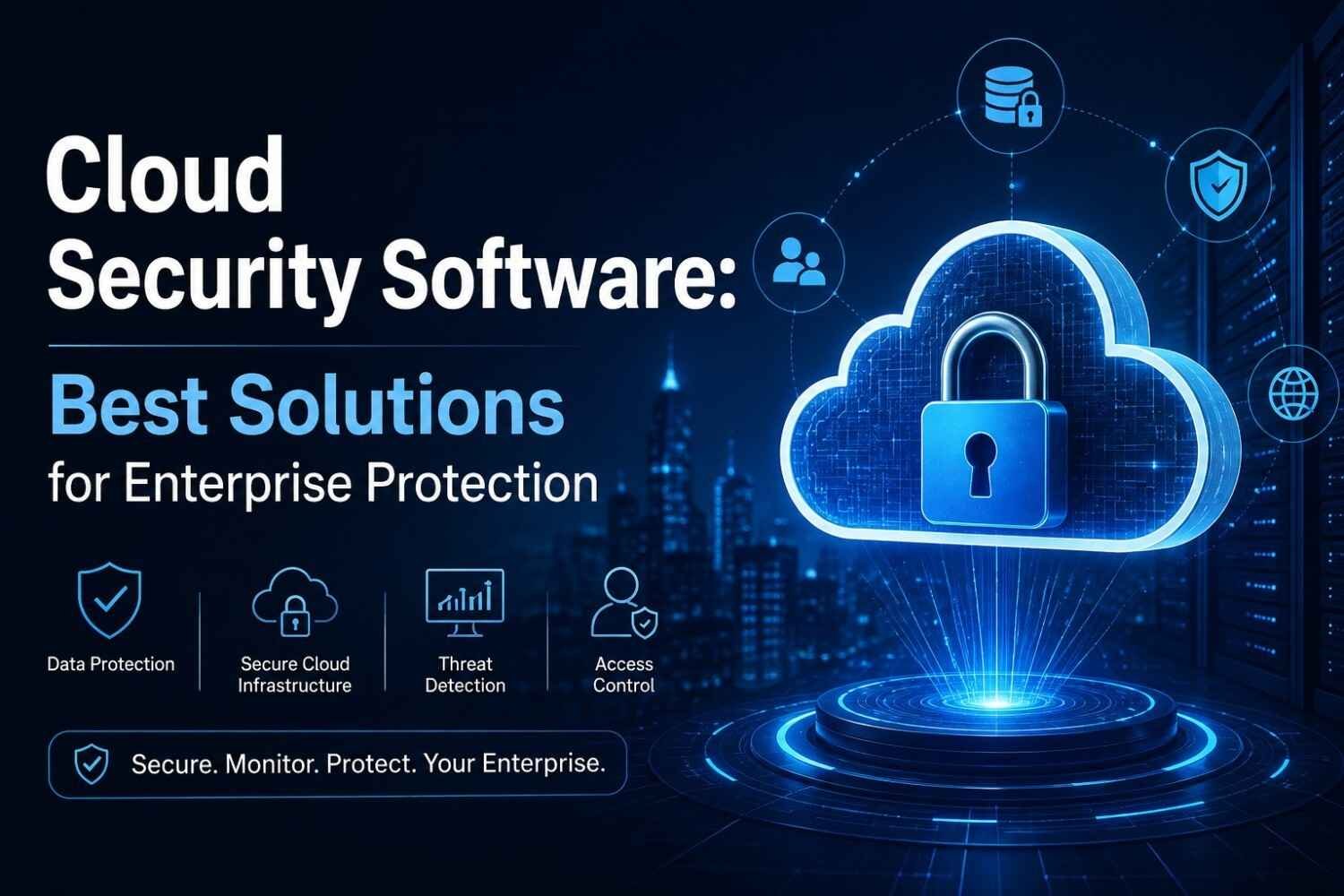
As businesses continue migrating their operations to cloud platforms, protecting digital assets has become more important than ever. Organizations store customer data, financial information, intellectual property, and mission-critical applications in cloud environments, making them attractive targets for cybercriminals.
Modern Cloud Security Software helps businesses defend against ransomware, phishing attacks, data breaches, insider threats, and unauthorized access. Whether your organization uses AWS, Microsoft Azure, Google Cloud, or a multi-cloud environment, choosing the right cloud security solution is essential for maintaining business continuity and regulatory compliance.
What is Cloud Security Software?
Cloud Security Software is a collection of technologies, policies, and security controls designed to protect cloud infrastructure, applications, data, and users from cyber threats.
These solutions continuously monitor cloud environments, identify vulnerabilities, detect malicious activities, enforce security policies, and help organizations meet industry compliance standards.
Why Enterprise Businesses Need Cloud Security
Businesses face increasingly sophisticated cyberattacks every year. Enterprise cloud security software helps organizations protect sensitive customer data, prevent ransomware attacks, detect suspicious user activity, secure remote work environments, reduce insider threats, improve compliance with regulations, monitor cloud workloads continuously, protect multi-cloud infrastructures, and automate threat detection using AI.
Without proper cloud security, organizations risk financial losses, reputational damage, legal penalties, and operational disruptions.
Essential Features of Cloud Security Software
1. Zero Trust Security
Zero Trust ensures every user and device is verified before accessing company resources, significantly reducing unauthorized access. Benefits include identity verification, least-privilege access, continuous authentication, and reduced attack surface.
2. Cloud Workload Protection
Cloud workloads require continuous monitoring throughout their lifecycle. Key capabilities include malware detection, runtime protection, vulnerability scanning, container security, and Kubernetes protection.
3. Identity and Access Management (IAM)
IAM helps businesses manage user identities and permissions. Features include Multi-Factor Authentication (MFA), Single Sign-On (SSO), Role-Based Access Control, Identity Governance, and Password Management.
4. Data Loss Prevention (DLP)
DLP solutions prevent confidential information from being leaked accidentally or intentionally. They monitor email, cloud storage, file transfers, USB devices, and sensitive documents.
5. Cloud Security Posture Management (CSPM)
CSPM automatically detects cloud configuration errors that may expose sensitive information. Benefits include compliance monitoring, misconfiguration detection, risk assessment, automated remediation, and continuous auditing.
6. Cloud Access Security Broker (CASB)
CASB acts as a security layer between users and cloud applications. Capabilities include shadow IT discovery, threat protection, access control, data encryption, and compliance enforcement.
7. AI-Powered Threat Detection
Artificial intelligence enables security platforms to identify abnormal behavior in real time. AI helps detect credential theft, insider threats, malware, ransomware, and Advanced Persistent Threats (APTs).
Benefits of Enterprise Cloud Security Software
- Reduced cybersecurity risks
- Better regulatory compliance
- Faster incident response
- Improved data protection
- Enhanced customer trust
- Lower operational costs
- Increased business resilience
- Centralized security management
- Automated threat detection
- Scalable protection for growing businesses
Best Cloud Security Solutions for Enterprises
- Microsoft Defender for Cloud
- Palo Alto Networks Prisma Cloud
- Wiz
- CrowdStrike Falcon Cloud Security
- Check Point CloudGuard
- Trend Micro Cloud One
- SentinelOne Singularity Cloud Security
- Lacework
- Fortinet FortiCNAPP
- Orca Security
Each solution offers unique capabilities such as CNAPP, CSPM, CASB, workload protection, identity security, AI-powered threat detection, and compliance management.
How to Choose the Right Cloud Security Platform
When evaluating cloud security software, consider multi-cloud compatibility, AI-powered threat detection, compliance certifications, ease of deployment, integration with existing tools, scalability, security automation, incident response capabilities, customer support, and total cost of ownership.
Future Trends in Cloud Security
- AI-driven cybersecurity
- Autonomous threat response
- Zero Trust Architecture
- Extended Detection and Response (XDR)
- Cloud Native Application Protection Platform (CNAPP)
- Security Service Edge (SSE)
- Secure Access Service Edge (SASE)
- Identity-first security
- Machine learning analytics
- Predictive threat intelligence
Frequently Asked Questions
What is Cloud Security Software?
It is software designed to protect cloud infrastructure, applications, users, and data from cyber threats while ensuring compliance and business continuity.
Which cloud security platform is best?
The best choice depends on your organization's size and requirements. Leading enterprise solutions include Microsoft Defender for Cloud, Prisma Cloud, Wiz, CrowdStrike, and CloudGuard.
Why is Zero Trust important?
Zero Trust verifies every user and device before granting access, minimizing the risk of unauthorized access and lateral movement within the network.
Is AI used in cloud security?
Yes. AI enhances threat detection, automates incident response, identifies anomalies, and improves overall cybersecurity efficiency.
Conclusion
Cloud adoption has transformed the way enterprises operate, but it also introduces new security challenges. Investing in robust Cloud Security Software is essential for protecting sensitive data, ensuring regulatory compliance, and defending against evolving cyber threats.
By implementing advanced capabilities such as Zero Trust, AI-powered threat detection, CSPM, CASB, CNAPP, and cloud workload protection, organizations can build a resilient security posture that supports long-term digital transformation. Choosing the right enterprise cloud security solution today will help safeguard your business against tomorrow's cyber risks.